WEF vs SOB Dream11 Prediction — The Hundred Men’s 2026 Match 19: Best Team, Captain & Vice-Captain Picks
Welsh Fire host Southern Brave at Sophia Gardens on 3 August 2026 in Match 19 of The Hundred Men’s 2026, with captaincy picks Stoinis and Ravindra and a recommended 1-5-4-1 Dream11 build.
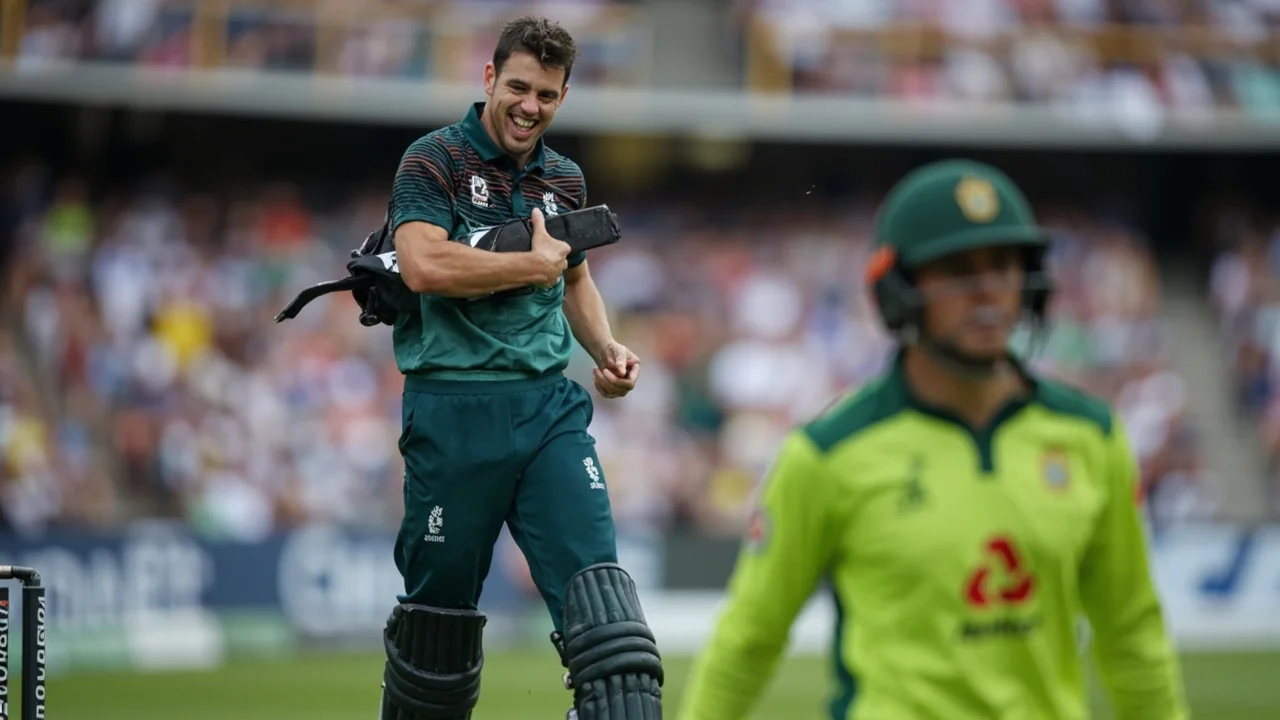
Welsh Fire look to complete the season double
Predicted playing XIs and batting order
Welsh Fire are expected to field Tom Kohler-Cadmore (wk), Phil Salt (c), Joe Root, Matthew Short, Rachin Ravindra, Jordan Cox, Ben Kellaway, Chris Woakes, Marco Jansen, Lockie Ferguson and Jafer Chohan. Salt’s captaincy and his opening role with Kohler-Cadmore is the first fantasy question: his tournament return of 104 runs at aggressive strike rate makes him the obvious vice-captaincy option for any build, but his value at Sophia Gardens is magnified by the pace-friendly surface — if Welsh Fire bat first, his powerplay ceiling against the new ball will dominate the points. Root slots in at three and provides the anchor role fantasy line-ups need when the surface offers seam movement in the first ten balls. Ravindra’s position at five gives him the licence to bat through the middle phase and bowl his left-arm spin in the powerplay; his tournament return of 145 runs and three wickets is exactly the all-rounder profile that produces the highest fantasy ceiling in 100-ball cricket. The lower order of Woakes, Jansen, Ferguson and Chohan is stacked with pace options, which both reinforces the bowling-first case at the toss and gives fantasy users a stacked bowling pool to draw from. Jordan Cox and Ben Kellaway are the order pieces whose slots are not yet locked — the toss could shuffle them up or down — but both are listed as batters in the batting depth that fantasy apps carry. Southern Brave’s probable XI is Tom Abell, Ben McKinney, Jamie Smith (wk), Marcus Stoinis, David Miller, Tristan Stubbs, Chris Jordan (c), Saif Zaib, Adil Rashid, Jofra Archer and Dan Worrall. Jordan’s captaincy, Archer’s death bowling and Rashid’s middle-overs match-up against Root and Ravindra form the core tactical questions. Smith’s wicketkeeper slot is the second vice-captaincy pick on the strength of 124 runs through the tournament, and his left-handedness against Welsh Fire’s leg-spin option Jafer Chohan is the match-up fantasy players will want to monitor. Stoinis’ position at four, with Smith at three and Miller at five, gives Southern Brave a stacked middle order. The all-rounder profile — nine wickets in four innings to share the tournament lead alongside 73 runs — is what makes him the headline captaincy option. The lower middle of Stubbs and Saif Zaib has batting depth but limited Dream11 ceiling; the bowling depth of Archer, Rashid and Worrall is the away side’s strongest fantasy pool. McKinney and Abell are the top-order pieces whose slots have not yet settled; the toss could promote one and demote the other.Where the captaincy edge sits for fantasy players
Stoinis takes the captaincy armband on the strength of a season that has produced 9 wickets in 4 innings — a share of the tournament lead — alongside 73 runs with the bat. The fantasy logic is straightforward: he is a guaranteed bowling slot in Southern Brave’s XI, batting at four gives him the licence to bat through the middle phase, and his record against left-handed batting makes him a strong match-up against any Welsh Fire left-hander who comes in early. At Sophia Gardens under cloud cover, where seam movement is supposed to be available through the first ten balls of each set, a bowling all-rounder who bats at four carries more upside than a top-order anchor built for a 20-over chase. Ravindra is the second captaincy pick and the small-league (SL) suggestion on the dossier, and the case rests on a different mechanism. His 145 runs plus three wickets across the tournament is the most balanced all-round profile in the fixture, and his left-arm spin gives him a natural match-up against Southern Brave’s right-handed middle order of Stoinis and Miller. In grand-league (GL) builds, where differential ownership matters more than ceiling alone, Ravindra is the higher-upside captain. The captaincy arithmetic therefore splits cleanly: Stoinis for cash-game builds where floor matters, Ravindra for grand-league builds where ownership is the lever. Phil Salt (104 runs) and Jamie Smith (124 runs) take the vice-captaincy slots. Salt is the powerplay option if Welsh Fire bat first; Smith is the chase-anchor option if Southern Brave bat second. Both selections reinforce the captaincy logic above: the captaincy is built around the all-rounder (Stoinis or Ravindra), and the vice-captaincy is built around the wicketkeeper-batter who can either mirror the captain’s pace-friendly logic (Salt if WEF bowl first) or carry the chase (Smith if SOB bat first).Pitch, weather and toss implications at Sophia Gardens
Sophia Gardens under cloud cover behaves like a different ground from Sophia Gardens under sunshine. The ball grips early, the pace bowlers extract seam movement through the first ten balls, and batters who commit early to the short ball get punished. The Hundred’s 100-ball structure compresses that window — six powerplay deliveries per side turn into twelve boundary-ball opportunities before the field spreads — so captain picks who bat inside the first fifteen balls carry more upside than anchors built for a longer chase. The dossier records the average first-innings score at 147, which suggests par is lower than a typical T20 venue and bowlers who keep the ball on a hard length through the powerplay will dominate. The forecast at 18°C and overcast is the second lever. Cool, cloudy conditions in Cardiff in early August typically reward seam movement in the first six balls of each set, which lines up with the recommended Welsh Fire pace pool of Woakes, Jansen and Ferguson. The chasing record is neutral at 50%, so the toss does not collapse to a single answer — but it does shift the captaincy logic. If Welsh Fire bowl first, Stoinis as captain with Salt as vice-captain is the higher-upside build; if Southern Brave bat first, Ravindra as captain with Smith as vice-captain is the chase-friendly build. Fantasy users who build two line-ups, one for the full innings and one for a 75-ball game, will want to mirror that split with their captain and vice-captain selections. Rain interruptions are a real possibility under an overcast Cardiff sky; if Duckworth-Lewis-Stern adjustments kick in the projection shifts and so do the picks — a bowling all-rounder becomes more valuable than a top-order anchor once the chase is shortened. The recommended build keeps one bowling all-rounder in the captaincy slot and one wicketkeeper-batter in the vice-captaincy slot, which protects the line-up against either format change.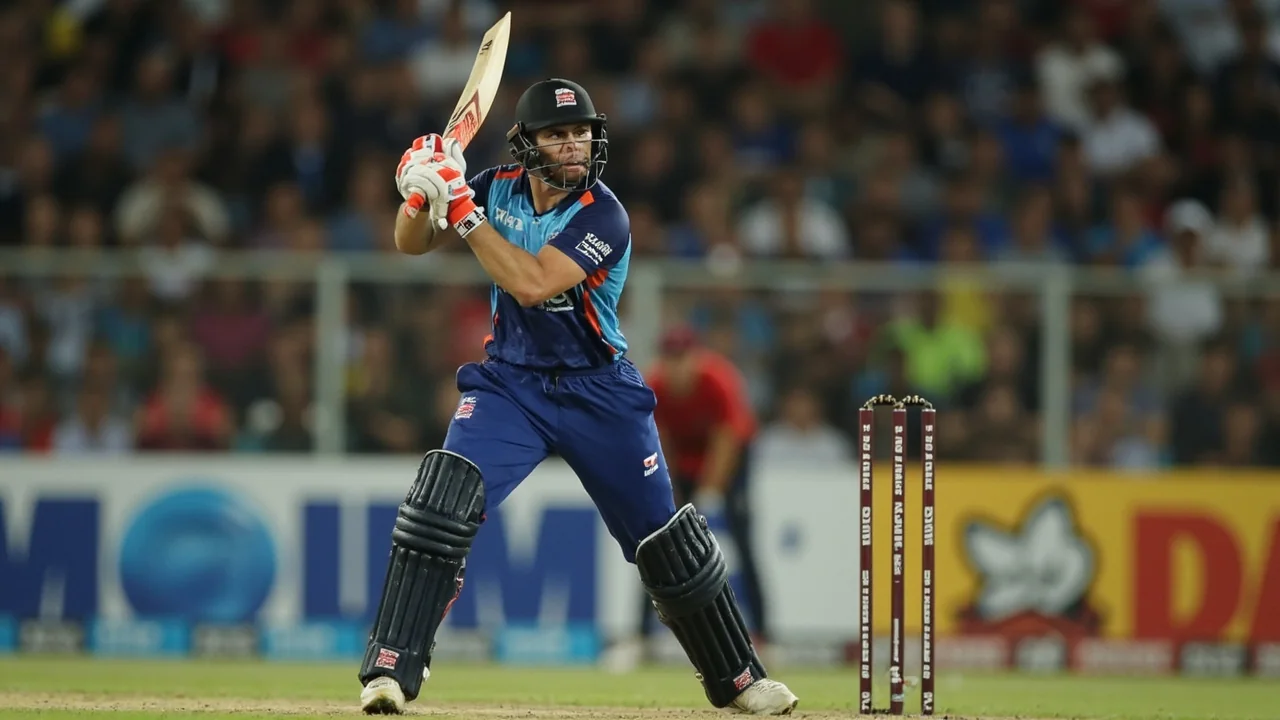
Reading the powerplay match-up
The pace-friendly surface at Sophia Gardens under cloud cover makes the new-ball pair the most valuable slot in either XI. Woakes and Ferguson from Welsh Fire, Archer and Jordan from Southern Brave, are the recommended bowling slots on a surface that should offer lateral movement through the first ten balls. Pairing Stoinis as captain with Salt as vice-captain gives the line-up a powerplay ceiling in both disciplines.
Suggested Dream11 team for WEF vs SOB
Team variant 1 (SL — captain Stoinis): Wicketkeeper (1) — Phil Salt (vc). Batters / All-rounders (5) — Joe Root, Rachin Ravindra, Marcus Stoinis (c), Marco Jansen, David Miller. Bowlers (4) — Chris Woakes, Lockie Ferguson, Jofra Archer, Adil Rashid. Combination: 1-5-4-1. The variant locks Salt at the head of the order where his powerplay ceiling is highest, uses Ravindra as the second all-rounder to cover the middle-overs spin match-up, and loads the bowling slots with three Welsh Fire pacers plus Archer and Rashid from the away side. Team variant 2 (GL — captain Ravindra): Wicketkeeper (1) — Jamie Smith (vc). Batters / All-rounders (5) — Phil Salt, Joe Root, Rachin Ravindra (c), Marcus Stoinis, Ben Kellaway. Bowlers (4) — Chris Woakes, Lockie Ferguson, Jofra Archer, Adil Rashid. Combination: 1-5-4-1. The variant swaps the captaincy to Ravindra and the vice-captaincy to Smith, which gives lower ownership at the captain slot and a chase-friendly wicketkeeper at the head of the order. Kellaway replaces Miller to add a Welsh Fire differential slot at batting depth, and the bowling pool is unchanged. The two-team split delivers a 5-6 / 6-5 balance in either direction and a 1-5-4-1 build that respects the dossier’s recommended combination. Punt picks Chris Jordan (death-overs wickets) and Chris Woakes (new-ball wickets) are the swap options if the toss collapses the captaincy logic into a single answer — Jordan in if Southern Brave bowl first and Archer is held back for the death, Woakes in if Welsh Fire bowl first and the surface holds seam movement through the first ten balls. Users who prefer a single-captain build should make Stoinis the captain and Salt the vice-captain if Welsh Fire bat first, or Ravindra the captain and Smith the vice-captain if Southern Brave bat first.Dream11 credit discipline and squad cost math
The Hundred’s 100-ball format compresses the points-per-credit calculation that longer-format fantasy formats allow. A bowling all-rounder who takes one wicket in the powerplay at Sophia Gardens earns roughly the same Dream11 points as a top-order batter who scores 25 off 18 in a T20, but the credit cost of the bowling all-rounder is usually lower than the credit cost of the anchor batter. Fantasy players building either of the two XI variants above should run the credit math twice — once with the captaincy on Stoinis, once with the captaincy on Ravindra — and pick the variant that leaves the highest residual credit for a 12th-player swap if the toss surfaces a late change. The dossier flags Tom Abell and Tom Aspinwall on Southern Brave’s squad list without confirmed starting slots; both are punt-pick swap targets if the Brave bench reads better on the morning of the match. Credit discipline also applies to the captain slot itself. The dossier’s SL recommendation is Stoinis and the GL recommendation is Ravindra, but a third build — captaincy on Joe Root — is worth modelling if Root’s credit cost is low relative to the Welsh Fire all-rounders. Root’s record at Sophia Gardens against pace and spin is the safest ceiling-floor combination in the fixture: he bats at three, he plays out the powerplay, and his strike rate through the middle phase against Southern Brave’s left-arm spin option (none in the predicted XI) or against Rashid’s leg-spin is the kind of stable return that grand-league captains in high-stakes contests reach for when they want to lock two of the eleven slots. For users building single-match contests rather than rolling fantasy leagues, the credit math simplifies: pick the SL build with Stoinis as captain, hold Salt as vice-captain, and treat Ravindra as the swap target if Welsh Fire bowl first and the seam movement shows up in the first ten balls. For users in rolling multi-match contests across Match 19 and Match 20, treat this fixture as a captaincy rotation slot and hold the differential upside (Ravindra) for the second fixture where ownership is lower.Match prediction and what to watch at the toss
The match prediction from the published preview points to a Welsh Fire win. The case rests on three observations that line up: a 3-from-4 record at the head of the table against a 2-from-5 record lower down, an 8-2 head-to-head advantage across prior meetings, and a bowling attack — Woakes, Jansen, Ferguson, Chohan — that matches the dossier’s description of the Sophia Gardens surface as best suited to pace. Southern Brave’s batting has the names — Smith, Stoinis, Miller, Stubbs — but the top order has not yet converted a powerplay start into a match-defining partnership, and the absence of a settled number three continues to expose them in the middle phase. For fantasy players, the prediction is less about who wins and more about how the win is constructed. If Welsh Fire bowl first and dismiss Southern Brave inside 90 balls, the bowling points from Woakes, Jansen and Ferguson will dominate. If Southern Brave bat first and post 155-plus, the chase ceiling for Salt, Root and Ravindra will dominate. Either way, the differential lever is the captaincy slot: Stoinis against Welsh Fire’s left-handers is the upside pick, Ravindra against Southern Brave’s right-handers is the floor pick. The punt picks (Jordan and Woakes) carry ceiling if death-overs wickets swing the points.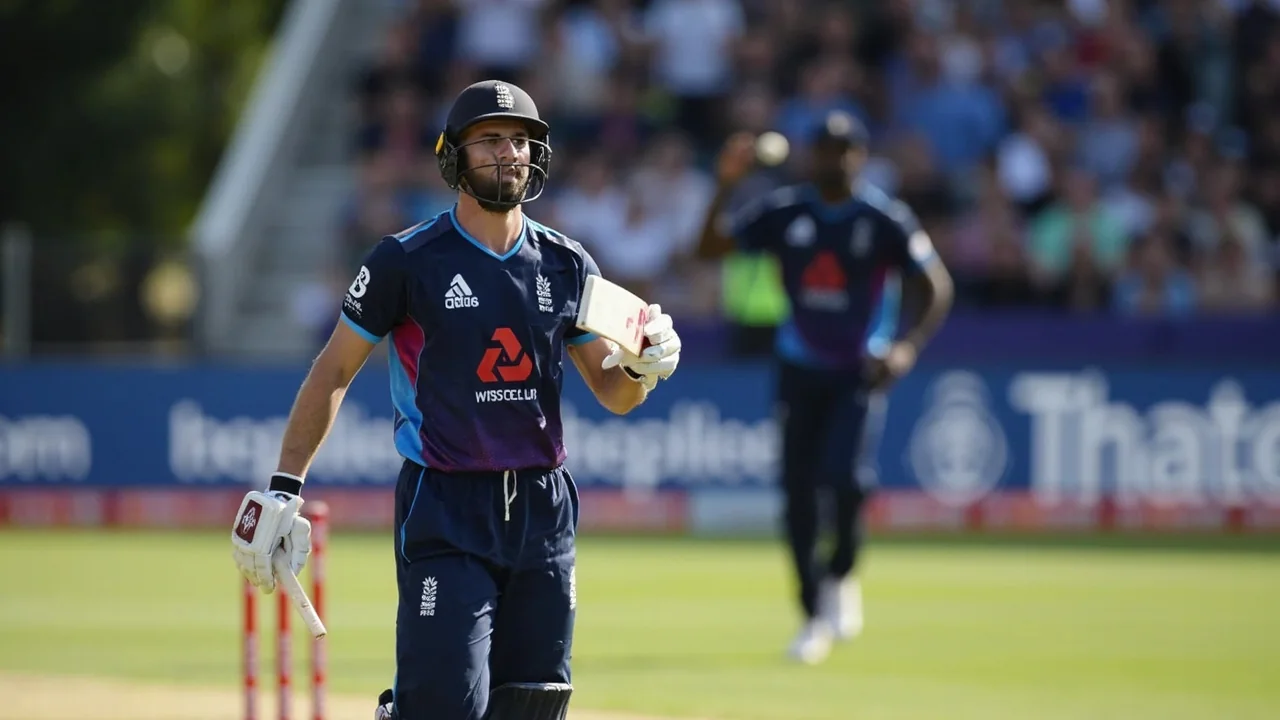
What to watch at the toss
Field placement at the death and the order in which Jordan and Archer take the new ball are the two tactical signals that will tell you whether the captain’s pick is more valuable than the vice-captain’s pick. If Welsh Fire bowl first, Stoinis as captain and Salt as vice-captain is the higher-upside build. If Southern Brave bat first, swap them and lead with Ravindra.
Sophia Gardens venue notes for fantasy users
Sophia Gardens has hosted The Hundred since the competition’s launch and the venue record is now large enough to draw structural conclusions. Pace bowlers who hit the hard length through the powerplay dominate — the venue’s 50% chase win rate is the headline number, but the sub-record on pace-friendly days skews higher. Spinners have a narrower window: they need to bowl in the middle phase when the ball grips under lights, and they tend to get hit if they drop short in the powerplay. Adil Rashid’s selection in Southern Brave’s predicted XI is therefore not just a match-up against Root and Ravindra — it is the venue’s preferred bowling slot for a leggie. For batting, the venue rewards batters who work the ball into the gaps through the powerplay rather than players who swing for the hills. Joe Root’s record at Sophia Gardens in white-ball cricket is the closest benchmark; Matthew Short’s inclusion at four in Welsh Fire’s predicted XI is the second-best benchmark for the gap-running profile. Power-hitters like David Miller at five for Southern Brave can dominate if they get 8-10 balls to settle, but their fantasy ceiling collapses if they are asked to bat on a slowing surface in the second innings. The combined recommendation is to weight the captaincy towards bowling all-rounders (Stoinis or Ravindra) rather than top-order batters, and to keep the vice-captaincy slot open for either Salt (powerplay) or Smith (chase) depending on the toss.Frequently asked questions
When does WEF vs SOB start and where is it played?
The match starts at 11:00 PM IST on 3 August 2026 at Sophia Gardens, Cardiff. It is the nineteenth fixture of The Hundred Men’s 2026.
Who are the suggested Dream11 captain and vice-captain picks?
Marcus Stoinis and Rachin Ravindra are the captaincy picks, Phil Salt and Jamie Smith are the vice-captaincy options. A common build runs Stoinis as captain with Salt as vice-captain, or Ravindra as captain with Smith as vice-captain if Southern Brave bat first.
What is the recommended Dream11 team balance?
The recommended combination is 1-5-4-1 — one wicketkeeper, five batters and all-rounders, four bowlers. The split across the two XI variants is 5-6 / 6-5 between Welsh Fire and Southern Brave, with Archer, Rashid and Miller the away-side locks.
What does the Sophia Gardens pitch report say?
The pitch is batting-friendly but best suited to pace, with an average first-innings score of 147 and chasing teams holding a neutral 50% win rate. Weather is forecast at 18°C and overcast, which favours seam movement through the first ten balls of each set.
How have both teams performed so far in The Hundred Men’s 2026?
Welsh Fire have three wins from four games and sit third in the table; Southern Brave have two wins from five games and need the result to boost their playoff hopes. The head-to-head across prior meetings is 8-2 in Welsh Fire’s favour, including the earlier meeting this season which Welsh Fire won.
Editor’s note: Two Hundred Men’s sides with contrasting form — three wins from four against two wins from five — meet at a venue that the venue record describes as batting-friendly but pace-led. Fantasy users should structure the captaincy around the toss — Stoinis or Ravindra — and load the bowling slots with Woakes, Jansen, Ferguson and Archer in a 1-5-4-1 build that respects the dossier’s recommended combination. The rolling captaincy analysis used here — weighting recent form, ground familiarity, matchup probability and toss-aware adjustments — is detailed in the Fantasy Tips Blog at IPL Fantasy Sports, where the weekly method is applied across every fixture in the Hundred Men’s 2026 calendar.